
Chamomile – The Silent Queen of Healing Herbs
- Dec 13, 2025
- 3 min read
Updated: Dec 16, 2025
As told by Tom, the old woodsman who understands the language of plants better than most folks understand each other.
🌼 The Flower That Smells Like Sunshine – A Meeting with Chamomile
Summer clung to the air that day—warm, gentle, humming like a tired bee. I sat at the edge of a hayfield, my back against an old pine. Between my fingers, I rolled a tiny white blossom, no heavier than a breath.
I crushed it lightly, and a scent rose up that felt like sunlight on bare skin… warm, sweet, quiet.
“Some plants shout their power. And then there’s chamomile—soft-spoken, yet stronger than you’d ever expect.”
Its white petals surround a golden heart that’s hollow, a small sun cupped inside the flower—one of the surest signs you’ve found the true chamomile.
Originally from Europe and West Asia, it traveled with farmers, soldiers, wanderers, and storytellers across continents. Today it grows almost everywhere the ground has been stirred by human hands.
And through the centuries, it has remained the gentlest of healers.
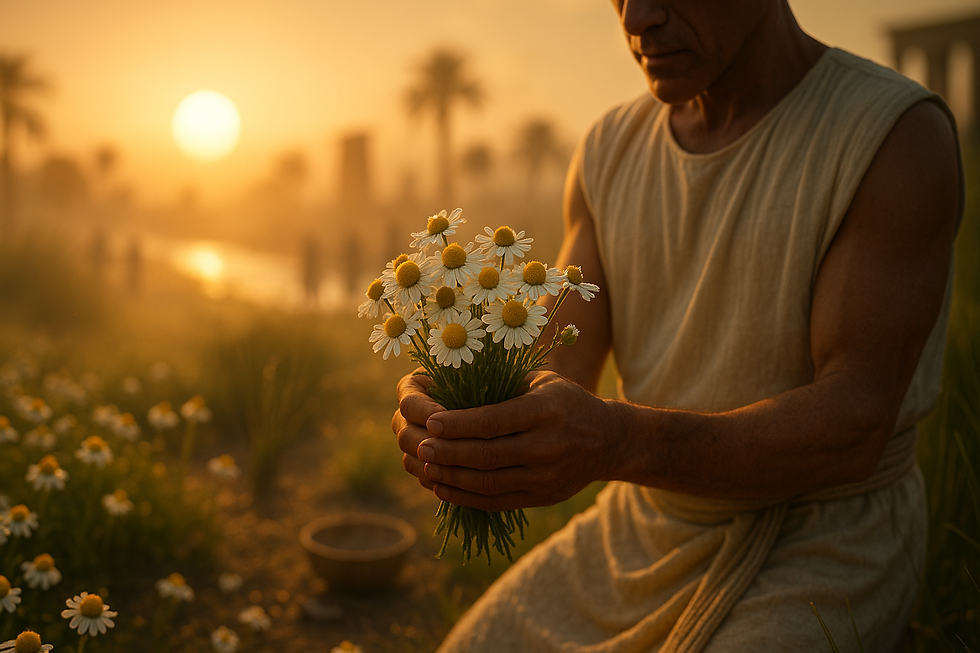
🏺 Origins, History & Ancient Cultures – The Flower of Mothers and Gods
Chamomile’s story stretches far into the roots of our civilizations.
In the ancient Mediterranean, it was a sacred plant.
The Egyptians called it the “Flower of the Sun” and dedicated it to the god Ra.
For the Greeks, it was a plant of the earth-mother—hence the name Matricaria, from matrix, meaning womb.
It soothed birth pains, calmed fevers, settled hearts.
The Germanic tribes drank it for strength and peace.Medieval monks wrote of it as “the comforter,” a plant whose warmth quieted both wounds and worries.
Tom likes to say:
“If you’ve ever smelled chamomile, you know why whole cultures praised it like a goddess.”
And he’s right.
🌱 Appearance, Life & Season – The Messenger of Summer
Chamomile may look delicate, but it’s built for survival.
How to recognize it:
thin white petals
bright yellow, hollow cone-shaped center
finely divided, feather-light leaves
grows 20–50 cm tall
It thrives where the earth has been disturbed—along field edges, abandoned lots, footpaths, sunny meadows. A true pioneer plant, arriving early to heal broken ground.
Blooming season: May to September.Chamomile is the smell, the softness, the warmth of summer itself.
When wind moves across a chamomile patch, it looks like thousands of tiny suns rising and falling in quiet rhythm.
💊 4. Healing Power – A Whole Pharmacy in One Flower
Chamomile isn’t just gentle—it’s powerful.
Active Compounds:
essential oils (especially bisabolol, a strong anti-inflammatory)
chamazulene
flavonoids
mucilage
Effects:
anti-inflammatory
antibacterial
calming
antispasmodic
wound-healing
soothing for skin and nerves
How It’s Used:
Tea: for stomach pain, anxiety, colds, fever, sleeplessness
Steam inhalation: for congestion & sinus inflammation
Compresses: for eye irritation, wounds, inflamed skin
Oils & salves: for burns, rashes, joint pain
Baths: for babies, sensitive skin, and emotional calm
Tom once told me:
“Burned my arm on a stove once, deep in winter. Chamomile salve was the only thing that let me sleep.”
Chamomile is a healer that doesn’t need to prove itself. It simply works.
🧪 Safety, Toxicity & Look-Alikes – Finding the True Queen
The true chamomile is non-toxic, gentle, and safe for most people.
But it does have impostors:
Roman chamomile (Chamaemelum nobile): similar but not identical in effect.
Scentless mayweed (Tripleurospermum perforatum): looks similar but barely smells; center is not hollow.
Stinking chamomile / dog fennel (Anthemis cotula): irritating smell, can cause skin reactions.
Golden rule: The real chamomile has a hollow, cone-shaped yellow center.
🌍 Mythology, Folklore & Spiritual Meaning – The Herb of Peace
Across cultures, chamomile has been a symbol of:
peace
purity
protection
home
The Germanic tribes believed it guarded children and travelers.
Many traditions burned it to chase off evil spirits.
People placed it under pillows for calm dreams.
In Eastern Europe, it remains a symbol of innocence, warmth, and belonging.
One evening at the fire, Tom said:
“Sometimes the soul doesn’t need a weapon or a plan. Sometimes it just needs a flower that smells like summer.”
🌄 Modern Meaning, Ecology & Use – The Healer of Earth and People
Today chamomile is everywhere:
in cosmetics (creams, soaps, baby lotions)
in medicine (salves, tinctures, teas, capsules)
in herbalism worldwide
as a bee plant, offering nectar long into summer
in permaculture, where it enriches soil and stabilizes disturbed land
Chamomile grows where the soil is hurt—and slowly makes it whole again.
Tom says:
“Chamomile isn’t a queen that rules. She’s a queen that heals.”


Comments