
Plantain – The Green Armor of the Earth
- Dec 11, 2025
- 3 min read
Updated: Dec 16, 2025
🌱 1. Where the Earth Bears Scars – The Path of the Plantain
The forest path beneath my boots is old. Carved by rain, hardened by wind, scarred by time. And right there, where the earth carries its deepest wounds, it grows: plantain.
Broad-leafed, rugged, stubborn. A plant that doesn’t flinch when life steps on it.
It grows where people walk — along paths, fields, old roadbeds, between stones. It follows us like a silent companion.
For thousands of years, plantain has walked in our footsteps. Not because it is tame — but because it is relentless.
When Europeans arrived in North America, Indigenous tribes called it the “Footprint of the White Man.” It followed settlers everywhere — stuck to boots, bags, wagon wheels.
I call it the Healer of the Trail.

🌾 2. History, Evolution & Symbolism
Plantain is a child of the Stone Age. Our earliest ancestors used it for wounds, digestion, and as a sign of fertile soil.
It’s a plant that doesn’t run when it’s trampled. It stays. And that’s why it’s been with us for millennia.
Among the Celts and Germanic tribes, plantain was a symbol of strength and healing — a plant for warriors and wanderers.
In early medieval Europe, it became one of the Nine Sacred Herbs of the Anglo-Saxons, celebrated for its power to protect, cleanse, and heal.
As I like to say:
“If you fall, plantain grows where you stood back up.”
🌿 3. Appearance & Way of Life
You’ll know it when you see it: broad oval leaves with long ribs that tear into fibers — nature’s blueprint for durability.
It grows from April to October, loving compact soil, paths, and sunlit clearings — all the places other plants avoid.
Its survival strategy is simple and brilliant:
Flat growth to resist wind and boots.
Elastic leaves that bend instead of break.
Deep roots that hold moisture even in drought.
A survivor. A quiet fighter.
💊 4. Healing Power & Use – The First-Aid Kit Under Your Boot
Plantain is a wilderness medicine chest, free for anyone who knows where to look.
Active compounds: mucilage, tannins, aucubin, vitamin C, silica.Effects: anti-inflammatory, antibacterial, wound-healing, soothing, decongestant.
Uses:
Chewed fresh leaves on insect bites or cuts.
Tea for coughs, throat irritation, and stomach issues.
Fresh juice for skin irritation.
Leaves as a natural bandage.
Soldiers, lumbermen, scouts — they all relied on it.
I remember:
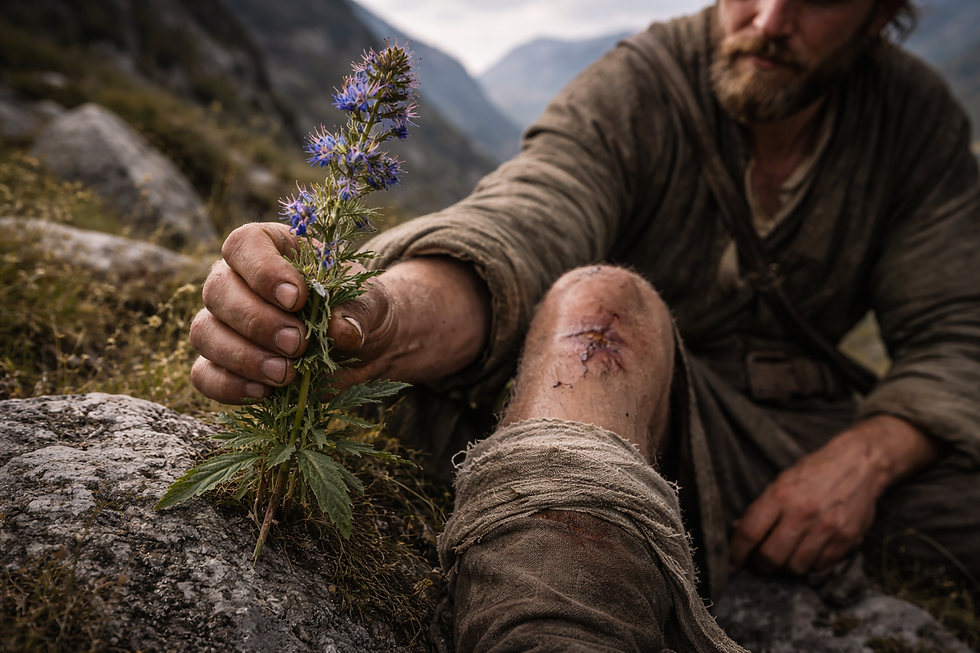
“Once, I sliced open my shin on a rusty hook deep in the woods. No bandage. No doctor. Just plantain — and patience.”
And it worked.
🌍 5. Ecology & Meaning
Plantain is more than a healer — it’s an architect of healthy soil.
Stabilizes the ground and prevents erosion.
Feeds insects, especially small pollinators.
Signals soil compaction, telling you where the land is tired.
Its seeds cling to paws, boots, and feathers — traveling wherever life goes. A plant that adapts, not retreats.
🌌 6. Myth, Folk Belief & Soul of the Plant
In old stories, plantain was the protector of travelers. People placed its leaves in their shoes to guard against blisters, fatigue, and wandering spirits.
Some believed it grew wherever heroes had fallen, as a sign of remembrance and courage.
Its symbols:
Endurance
Healing
Humility
Loyalty to the earth
And if you ask me:
“Plantain doesn’t fight — it endures. And sometimes, that’s the greatest strength there is.”


Comments