
Ribwort Plantain – The Green Lance of the Wild
- Dec 12, 2025
- 3 min read
Told by Tom, the old woodsman who speaks the language of plants better than most men speak their mother tongue.
🌱 The Narrow Blade in the Grass – Meeting Ribwort Plantain
The evening smelled of warm earth and distant rain as I knelt at the edge of the forest. Between the tall grasses and the shadows of the pines, something slender caught my eye — a green blade, sharp as a whisper.
I picked it up, brushed my thumb along the stiff ribs of the leaf, and muttered:
“Some plants whisper. But ribwort plantain… it warns and heals at the same time.”
Plantago lanceolata — the lance‑bearer of the meadow. A plant that doesn’t ask for attention, yet is always there when you need it.
It began its long journey in Europe and Asia. But like many things that serve quietly and endure fiercely, it spread across every continent — carried by livestock, travelers, and the wind itself.
Treading, drought, frost, heat — ribwort plantain survives it all. It grows where the earth is tired… and where humans leave their footprints.

🌿 History, Evolution & Origins – Humanity’s Silent Companion
Ribwort plantain has walked with us since the Stone Age. As medicine, forage, and a natural compass for understanding the soil.
North America’s Indigenous peoples noticed plantain species immediately. They called them the “Footprints of the White Man” — plants that appeared wherever settlers passed.
In medieval Europe, ribwort plantain was one of the Nine Sacred Anglo‑Saxon Herbs, invoked in ancient runic spells to stop bleeding, calm fever, and ward off poison.
Old herbals describe it as:
Keeper of the blood,
Cleaner of the lungs,
Soother of the skin.
And every time I crush one of its leaves between my fingers, I think:
“Ribwort plantain was our ancestors’ first‑aid kit — before there were doctors, there were leaves.”
🌾 How to Recognize It – The Lance of the Grasslands
Ribwort plantain hides in plain sight — once you learn its face, you’ll see it everywhere.
Traits:
long, narrow, lance‑shaped leaves
strong parallel ribs that tear like fibers
dark brown flower spike with a halo of tiny white blooms
low rosette that resists boots and wind
Where It Lives:
Paths, meadows, edges of fields, forest trails — all the wild places shaped by footsteps and weather.
Season:
April to October, sometimes longer.
Survival Tools:
deep taproot for drought
rapid regrowth after damage
elastic ribs that keep leaves from tearing
flat growth to avoid being crushed
It’s the quiet lance of the meadow — sharp, steady, unbreakable.
💊 4. Healing Power & Wild Applications – The Lungs of Nature
Ribwort plantain is a medicine chest disguised as a weed.
Active Compounds:
aucubin
mucilage
flavonoids
tannins
silica
vitamin C
Medicinal Effects:
antibacteral
anti‑inflammatory
expectorant
blood‑stopping
itch‑relieving
wound‑healing
Uses:
Cough & chest: tea, syrup, cold extract
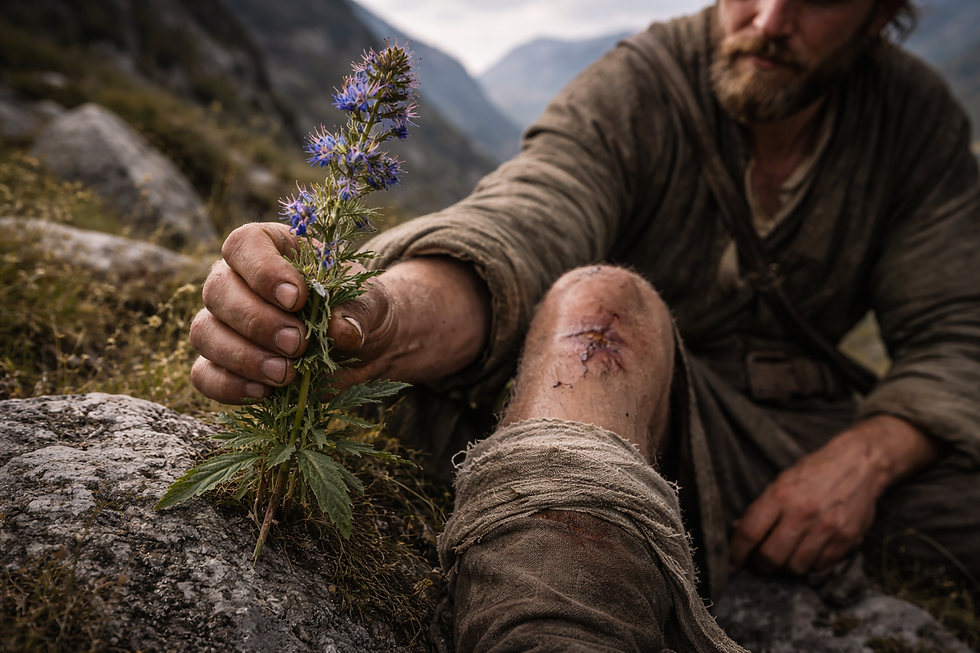
Cuts & stings: chewed leaf placed directly on skin
Skin issues: juice for rashes, irritation, minor burns
In the wild, we call it the “green cortisone of the forest” — fast, reliable, everywhere.
I remember a moment:
“A hornet stung me once, nearly brought me to my knees. I chewed a ribwort leaf and slapped it on. Ten minutes later, I was hauling logs again.”
Nature doesn’t always shout. Sometimes it just hands you a leaf.
🌍 5. Mythology & Folklore – The Healer’s Lance
In ancient Anglo‑Saxon poems, ribwort plantain was praised as:
“The way‑plant, stauncher of blood, guardian of the warrior.”
Germanic tribes carried it as a charm of purity and protection. Travelers tucked its leaves into their boots to ward off pain, exhaustion, and malevolent spirits.
Some stories say ribwort plantain grows where people carried heavy burdens — rising from the earth to ease what weighed on their hearts.
Its symbols:
courage
clarity
endurance
healing
Not a blade for battle — a blade for mending.
🌌 6. Safety, Uses & Modern Science
Ribwort plantain is non‑toxic — one of the safest wild plants in Europe and North America.
(Just wash it well and never gather leaves from roadsides.)
Modern studies confirm:
strong antibacterial activity (Staphylococcus, Streptococcus)
measurable anti‑inflammatory effects
real relief for respiratory issues
Ecological Role:
forage for livestock
food for insects
deep roots that open compacted soil
A small plant, but a mighty architect of the land.
🌄 7. The Soul of Ribwort Plantain – The Silent Warrior
The sun sank low behind the ridge, painting the meadow in gold. The narrow leaves of the plantain stood like tiny spears catching the last light.
I breathed in the scent of moss and smoke and said:
“Ribwort plantain isn’t a hero that shouts. It heals in silence — and that makes it a warrior rarer than most.”
And for a moment, I swear the grass agreed.


Comments